

Berkeley, Calif. | Through Sept. 5, 2026
Berkeley, Calif. | Through August 2026
Berkeley
Upon the Gears
Travel doesn’t always need to feel escapist. It can — and possibly should — bring us closer to places and moments that matter (especially now).
Stay at the Hotel Shattuck Plaza, where the original 1910 chandelier still hangs overhead, and a very Berkeley peace symbol is worked into the marble beneath your feet.

Roam the streets and stoops of Berkeley’s Free Speech Movement of 1964, and carry the thread into BAMPFA for a perfectly timed exhibit.
Dine at a place where the Grilled Purple Cauliflower is its own kind of radical demonstration.
As always, your stay, meal and local experience are booked for you in one tap.
Get the full story for the weekend.

Why here?
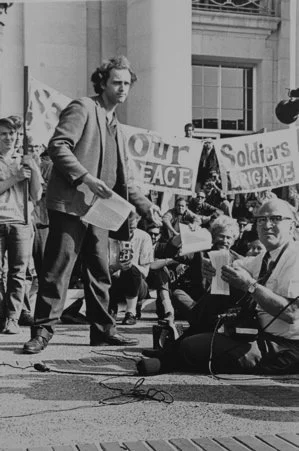
A Google search on Berkeley protests doesn’t much narrow it down.
You’ll need to be specific about your sweeping act of defiance. Do you mean the demonstration that occupied San Francisco’s Sheraton-Palace Hotel? Or the Free Speech Movement’s student takeover of an administration building that was only disbanded by police siege? Or the country’s earliest large-scale protest of the Vietnam War?
Not to mention the dozens of other causes that have been born in and fought on the quads and corners of UC Berkeley since its founding in 1868.
Read on or
College campuses are places where emerging ideas and young energy often concoct into action. But Berkeley is possibly the country’s most consistently catalytic example: the university and its immediate neighborhood have been the site of more landmark demonstrations, walk-outs, stand-offs, sit-ins, revolts, occupations and outright uprisings than maybe anywhere else in America.
We’ll be looking at one of these events (although many are interconnected), just to keep things manageable.
In 1964, UC Berkeley administrators blamed student political agitation for motivating a (largely student-led) occupation of San Francisco’s Sheraton-Palace Hotel, in protest of the hotel’s discriminatory hiring practices.
In a move they hoped would turn down the temperature, the university categorically banned student political organizing on a storied corner of Berkeley: the intersection of Telegraph and Bancroft, a longtime hub for agitation and pamphleteering that served as a gathering spot for campus groups.
In response, students set up tables in front of Sproul Hall, a colossal administrative building that held the school’s chancellor’s office — and in no time, Jack Weinberg, the 24-year-old chairman of the Berkeley chapter of CORE (Congress of Racial Equality) was arrested.
But before the squad car could haul him away, the vehicle was surrounded by 3,000 students, some of whom climbed atop it to make speeches. They took their shoes off first to avoid scratching the paint. Quite something.
The students prevailed and Weinberg was released, but the ban on political speech continued.
One of those police-car-mounters had been Mario Savio, a leader of what would become the Free Speech Movement. Savio later made one of the most enduring orations of the era, impromptu, from the steps of Sproul Hall that December.

You should really watch the whole thing. There’s also a vivid first-hand account of some of these events from Lee Felsenstein.
After Savio’s speech, Joan Baez played ‘Blowin’ in the Wind’, and then, calmly, more than 800 students marched into Sproul Hall and occupied it. It took police more than 12 hours to arrest them all.
By January, with many university faculty now having joined the movement themselves, the administration had flatly folded. They gave amnesty to the activists, and ultimately returned the right to on-campus political advocacy.
The kids that hopped up on a police car — and up onto the wheels and into the gears — won. And Berkeley is still alive with fight today.

This summer in Berkeley, discover…
The stay.
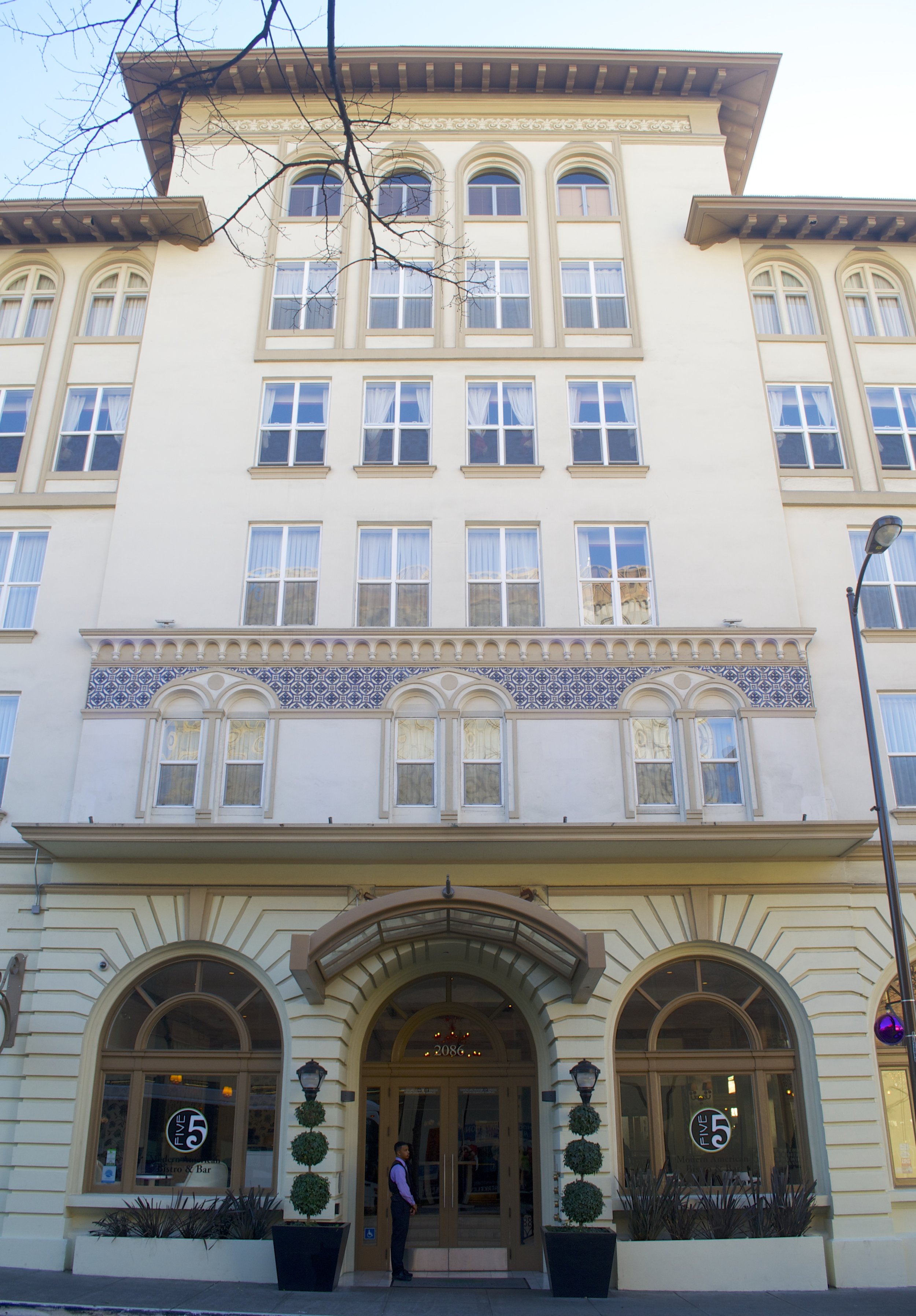
Hotel Shattuck Plaza
It’s a century-old landmark, built by a gold prospector in the Mission Revival Style, and it’s right in the heart of Berkeley history (protests and otherwise).
A recent renovation added a peace symbol in the marble of the entryway, and there’s something about the pairing — the hotel’s stately old grandeur with this slight hippie incursion — that feels extremely Berkeley and right.
Hotel reserved and pre-paid, just arrive.

The day.
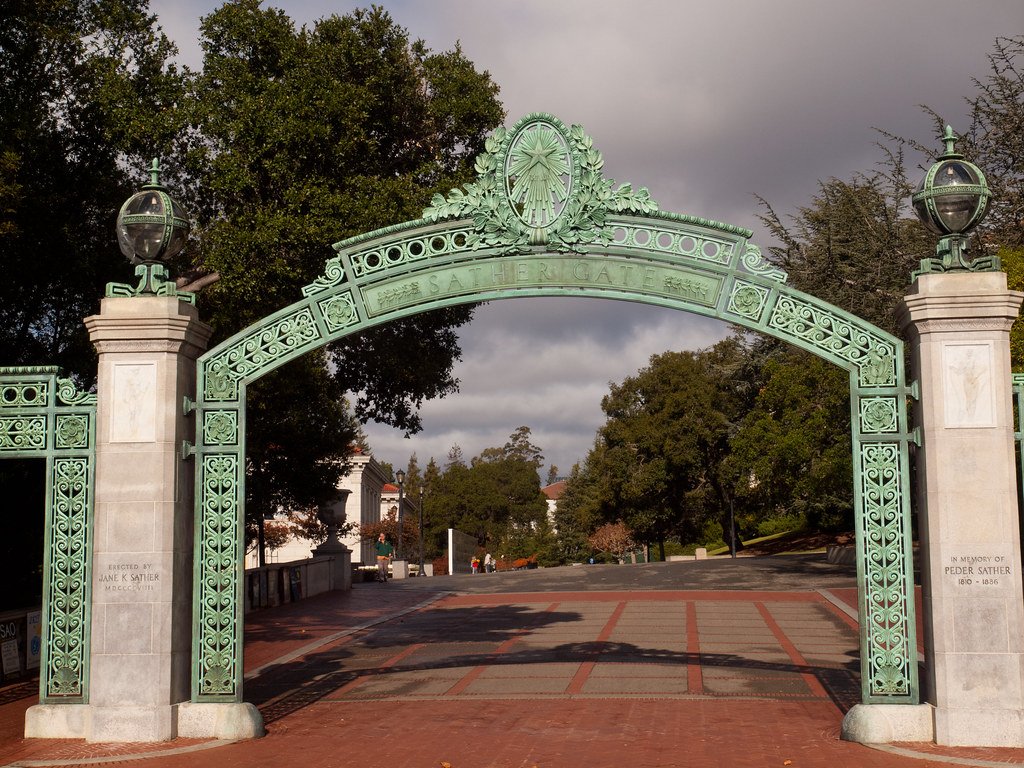

Image via BAMPFA
Telegraph Avenue, Sproul Plaza — and a perfectly-timed museum stop.
San Francisco’s Haight-Ashbury and Golden Gate Park have their Summer of Love bona fides, but it’s Telegraph Avenue that was probably the intellectual center point of the 1960s counterculture.
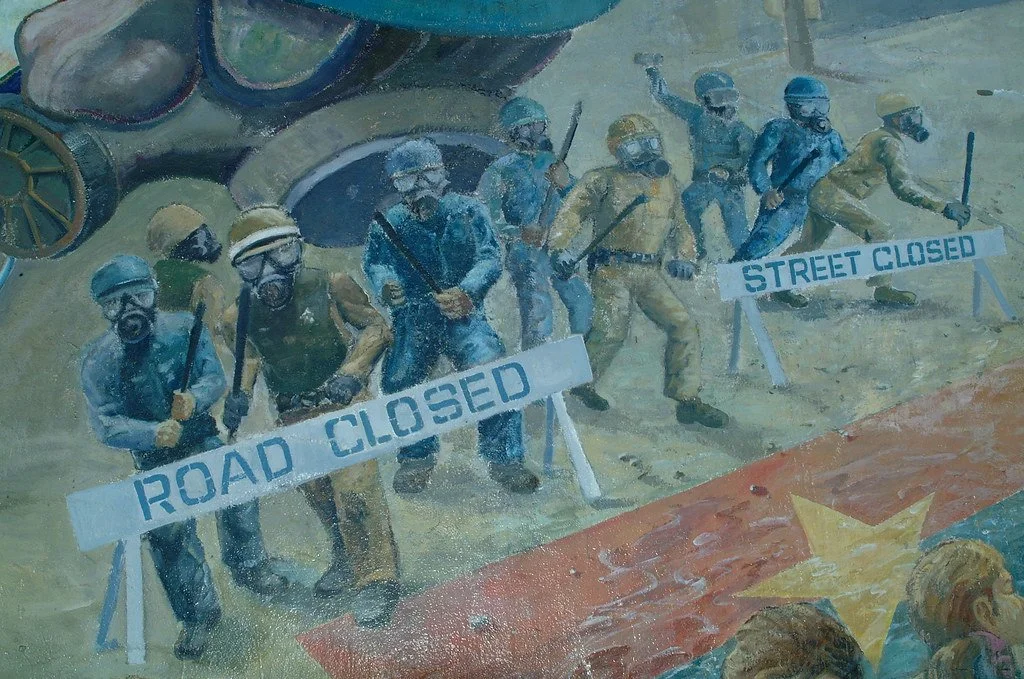
UC Berkeley’s banning of student political speech at the corner of Telegraph and Bancroft, just off the UC Berkeley campus, was a key precipitator of the Free Speech Movement. There’s Sproul Hall Plaza and the steps — where Mario Savio called Berkeley to put itself into the gears — and also the People’s History of the Free Speech Movement mural and a long roster of other significant sites.
Also: good timing this summer: at the Berkeley Art Museum & Pacific Film Archive, there’s an ongoing exhibit dedicated to the art of the political and protest poster. Take in the posters and the rest of the excellent art and film work on view at the museum.
Admission for two to BAMPFA, along with a curated Overnightist self-guided walking tour of 1960s protest era Berkeley.
The find.
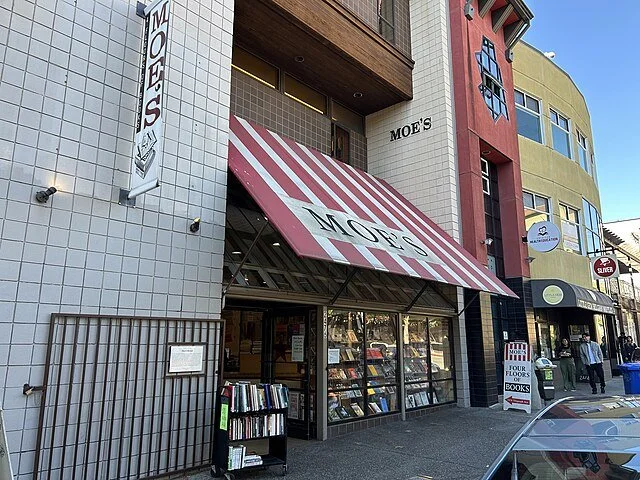
Moe’s Books
Going strong since 1959, Moe’s was here during the 60s protest era, and is perfectly representative of those principles.
As they put it, the store’s namesake founder Moe Moskowitz “sparred with the City Council over matters ranging from business permits to civic beautification, all of which were a prelude to his involvement in the Free Speech Movement and protests against the Vietnam War.”
“Remaining true to his pacifist principles, Moe opposed not just the war, but any anti-war tactics,” says the shop, adding that “all the while he kept his bookstore open during curfews to shelter protesters and resist what he saw as authoritarian rule.”
We’re including a $50 credit to put toward any purchase at Moe’s.
The food.
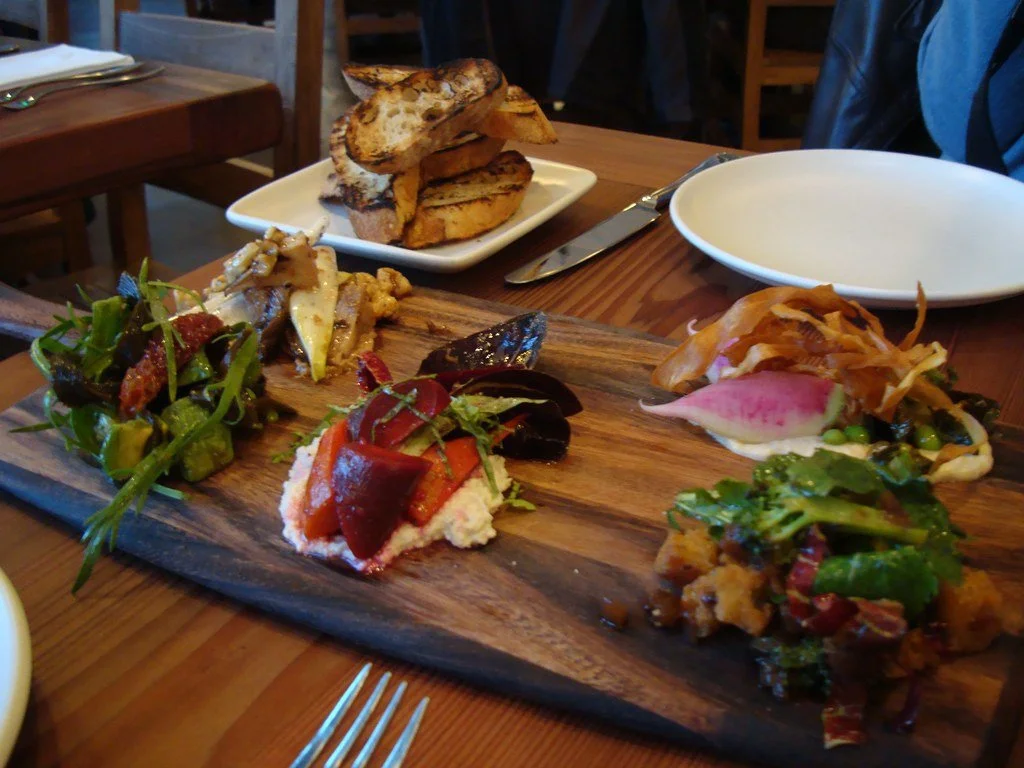
Gather
Gather believes that “restaurants can be a force for good—bringing people together, supporting local farmers and artisans, and making a positive impact on our community and the planet.”
The menu is locally sourced and creative, with a curation of West Coast wines and cocktails. They connect, in a culinary way, to the neighborhood’s broader ethos.
“Surrounded by a community of advocates and innovators,” says Gather, “we strive to reflect that same commitment.”
Reservations made, dinner and drinks are pre-paid.
The tucked away.
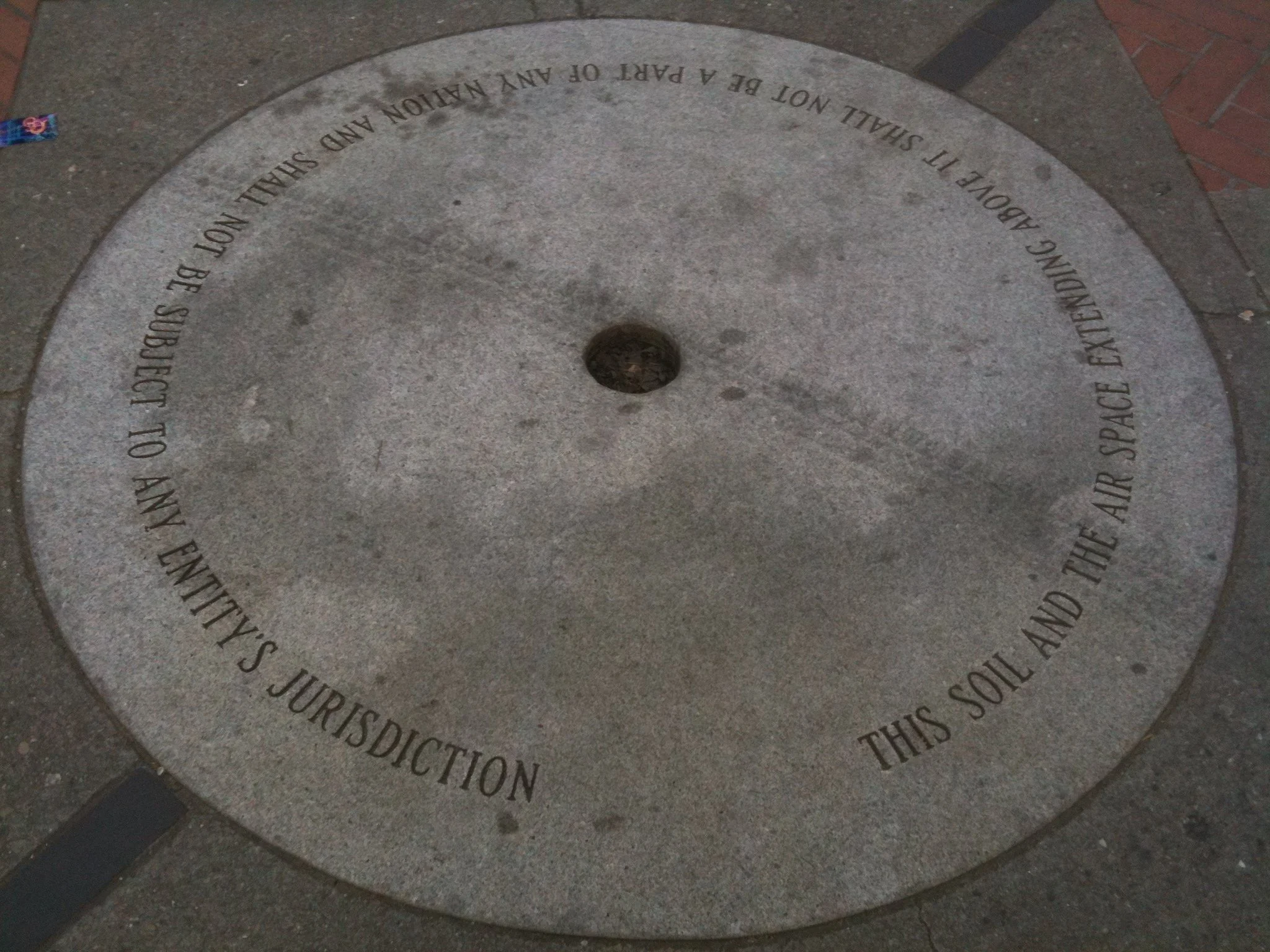
The Invisible Monument
While you’re roaming Sproul Plaza, look for this very small (six inches across) ‘invisible monument’ to free speech. It’s a formless vertical cylinder of air, represented only by this brief inscription on the flat of a paving stone:
“This soil and the air space extending above it shall not be a part of any nation and shall not be subject to any entity’s jurisdiction.”
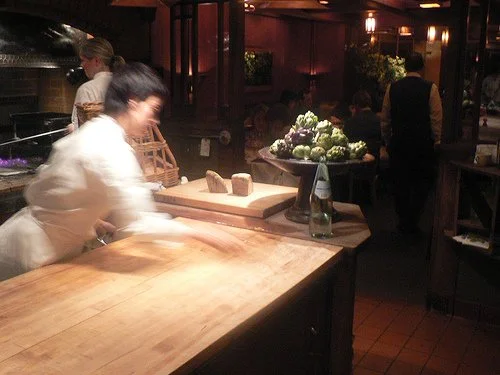
Chez Panisse
Drop in upstairs at Chez Panisse.
Let us clarify a little on this one: you have reservations on Saturday night in the cafe. We don’t have a food and drink credit built into this one, but the reservation is essential, so we’ll lock that down.
Chez Panisse and Chef Alice Waters more or less invented the farm-to-table movement, fixating on ingredients over technical chops. And Waters is a UC Berkeley alum who herself was on campus during (and active in) the Free Speech Movement of the mid-1960s.
The cafe menu changes daily but here’s a sample.
You have reservations Saturday evening. Stop in for a drink or more.
The evening mood.
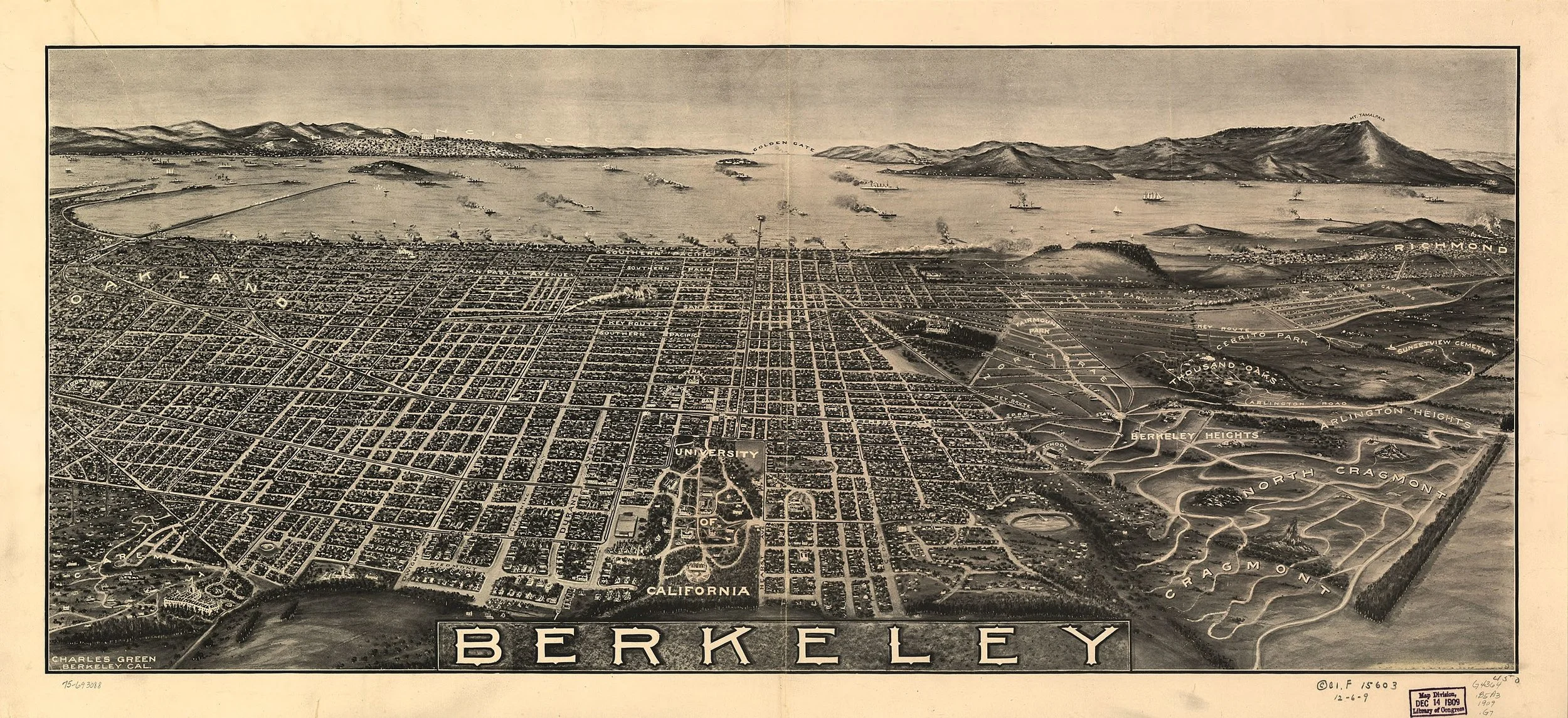
One-night stay at Hotel Shattuck Plaza, just outside the campus of UC Berkeley.
Food and drink credit for dinner at Gather. $185 for two travelers, or $95 for one traveler, inclusive of tax and gratuity.
A self-guided Overnightist walking tour of Free Speech Movement era Berkeley, admission to BAMPFA — including Politics of the Poster — and a $50 credit at Moe’s Books in the form of a gift card. Waiting for you at the counter, just stop in.
Booked for you in a tap.
See here for a full list of photo credits for this story.
So how does this work?
No payment is needed just yet. Request your reservation below, and we’ll make sure the weekend is ready on our end: then we’ll email you a secure payment link along with meal reservation times and event details (unless you’re on a strict schedule, let us arrange the times to ensure all the components flow together nicely. You just arrive).
Once you’re booked, we’ll send you all the key details: check-in, addresses, and reservation notes. For now, just let us know you’d like us to get going.